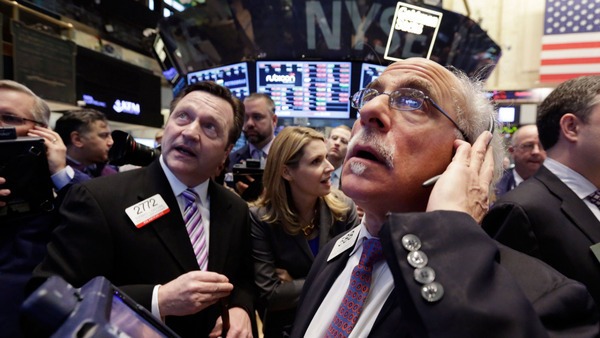


On Wednesday, New York Community Bancorp, Inc. (NYSE:NYCB)’s shares inclined 1.13% to $18.41.
New York Community Bancorp, Inc. (NYCB) is an incredibly well-run bank. Since 1994, its first full year as a publicly traded company, the New York City-based bank has generated a total return of 3,870%, according to YCharts.com. That’s nearly twice the total return of U.S. Bancorp and more than twice that of Wells Fargo, the two most widely diversified commercial banks in the country.
Even in times of economic stress, New York Community Bancorp tends to write off only a minuscule portion of the loans it originates. At the height of the savings and loan crisis of the 1980s and early 1990s, it charged off a mere 0.07% of its loan portfolio. This was a fraction of the 1.5% industry average. The story was the same during the Great Recession. In 2010, while the average bank charged off 2.5% of its loan portfolio, New York Community Bancorp’s net charge-off ratio crested at only 0.21%.
New York Community Bancorp, Inc. operates as a holding company for New York Community Bank and New York Commercial Bank that offer banking products and financial services in New York, New Jersey, Florida, Ohio, and Arizona. The company offers various deposit products that comprise checking and savings accounts, individual retirement accounts, certificates of deposit, NOW and money market accounts, and non-interest-bearing accounts. Its loan portfolio comprises one-to-four family loans; multi-family loans; commercial real estate loans; acquisition, development, and construction loans; commercial and industrial loans; home equity lines of credit; and consumer loans.
Sigma Designs Inc (NASDAQ:SIGM)’s shares gained 14.21% to $10.21.
Sigma Designs Inc (SIGM) a leading provider of intelligent system-on-chip (SoC) solutions for Smart TV, Internet of Things Devices for Smart home, IP-based set-top-boxes and Media Connectivity, recently stated financial results for its first quarter of fiscal 2016, which ended May 2, 2015.
Financial Results
GAAP net revenues for the first quarter of fiscal 2016 were $55.9 million, up $1.1 million, or 1.9%, from $54.8 million stated in the previous quarter, and up $19.0 million, or 51.6%, from $36.9 million stated for the same period in fiscal 2015.
Non-GAAP net revenues for the first quarter of fiscal 2016, which excludes $0.8 million for the reversal of accrued rebates, were $55.1 million. This compares with non-GAAP net revenues of $54.8 million stated in the previous quarter, and $36.9 million stated for the same period in fiscal 2015.
GAAP gross margin in the first quarter of fiscal 2016 was 52.5%. This compares with a GAAP gross margin of 48.7% in the previous quarter, and 54.9% for the same period in fiscal 2015.
Non-GAAP gross margin in the first quarter of fiscal 2016 was 53.8%. This compares with a non-GAAP gross margin of 50.8% in the previous quarter, and 58.1% for the same period in fiscal 2015.
GAAP operating expenses in the first quarter of fiscal 2016 were $27.9 million, contrast with GAAP operating expenses of $29.1 million in the previous quarter, and $28.7 million for the same period in fiscal 2015.
Non-GAAP operating expenses in the first quarter of fiscal 2016 were $25.4 million, contrast with non-GAAP operating expenses of $26.1 million in the previous quarter, and $25.5 million for the same period in fiscal 2015.
GAAP net loss for the first quarter of fiscal 2016 was $0.4 million, or $0.01 per diluted share. This compares with a GAAP net loss of $3.6 million, or $0.10 per diluted share in the previous quarter, and a GAAP net loss of $9.9 million, or $0.29 per diluted share, for the same period in fiscal 2015.
Sigma Designs, Inc., an integrated semiconductor solutions provider, provides intelligent media platforms for use in the home entertainment and home control markets. Its media processor product line comprises a range of platforms that are based on integrated chips, embedded software, and hardware reference designs.
At the end of Wednesday’s trade, SunTrust Banks, Inc. (NYSE:STI)‘s shares surged 1.38% to $44.01.
SunTrust Banks, Inc. (STI) declared that it plans to release second quarter 2015 results prior to the market opening on Friday, July 17, 2015.
SunTrust Banks, Inc. operates as the holding company for SunTrust Bank that provides various financial services in the United States. The company operates in three segments: Consumer Banking and Private Wealth Administration, Wholesale Banking, and Mortgage Banking. The Consumer Banking and Private Wealth Administration segment offers deposits, home equity lines and loans, credit lines, indirect auto loans, student loans, bank cards, and other lending products, in addition to various services.
Manulife Financial Corporation (USA) (NYSE:MFC), ended its Wednesday’s trading session with 2.27% gain, and closed at $19.56.
Manulife Financial Corporation (USA) (MFC) Capital markets in emerging economies have remained significantly underdeveloped relative to their powerhouse underlying economies, but will likely experience profound shifts over the next 15 years, with implications for debt and equity investors, according to a new report from Manulife Asset Administration.
The balance of global economic power, the authors note, has shifted toward emerging economies, with these nations combined now accounting for 51 percent of global output on a purchasing power parity basis. However, emerging markets account for only 22 percent of total global equity market capitalization and just 14 percent of both corporate and sovereign bond market value, respectively. This relatively stunted capital market growth is evolving fast, and the new Manulife Asset Administration report looks at ways investors may take advantage of the secular trends likely to dominate emerging market investing in the years ahead.
China is a case in point in the report. Within emerging market economies, household and institutional equity ownership is structurally low. For example, while more than 50 percent household wealth in the U.S. is held in the stock market, China, with a savings rate of 47 percent has a stock market participation level of only 6.5 percent. But markets there are liberalizing, with the launch of the Shanghai-Hong Kong Stock Connect program at the end of 2014 a landmark event in the path towards the global integration of China’s capital markets, by right away enabling direct foreign access to its domestic equity market. Further steps comprise the phased inclusion of China’s domestic A-shares in MSCI global benchmarks over the next year or so and the inclusion this year of US-listed Chinese ADRs in the China country and emerging markets global index.
Changes to the Chinese stock market index are also likely to have an impact. For example, the weighting of so-called ‘New China’ – the new service sector economy in China – is predictable to double to become nearly a third of the index. Taken together, changes should result in an index that is more representative of the country’s economic changes from the end of 2014. It is likely that this will have an immediate impact in terms of investment flows – as the changes in index composition are likely to make the market more attractive to foreign investors – with potential implications for the size of China in the overall index.
Manulife Financial Corporation, together with its auxiliaries, provides financial protection and wealth administration products and services to individual, corporate, and business customers primarily in Asia, Canada, and the United States. It offers various individual life and health insurance, and individual and group long-term care insurance products through insurance agents, brokers, banks, financial planners, and direct marketing. The company also provides annuities, pension contracts, and mutual fund products and services; various retirement products to group benefit plans; deposit and credit products to Canadian customers; and non-guaranteed, partially guaranteed, and fully guaranteed investment options through general and separate account products.
DISCLAIMER:
This article is published by www.wsnewspublishers.com. The Content included in this article is just for informational purposes only. All information used in this article is believed to be from reliable sources, but we make no representations or warranties of any kind, express or implied, about the completeness, accuracy, or reliability with respect to this article.
All visitors are advised to conduct their own independent research into individual stocks before making a purchase decision.
Information contained in this article contains forward-looking information within the meaning of Section 27A of the Securities Act of 1933 and Section 21E of the Securities Exchange Act of 1934, counting statements regarding the predictable continual growth of the market for the corporation’s products, the corporation’s ability to fund its capital requirement in the near term and in the long term; pricing pressures; etc.
Any statements that express or involve discussions with respect to predictions, expectations, beliefs, plans, projections, objectives, aims, assumptions, or future events or performance may be forward looking statements. Forward-looking statements are based on expectations, estimates, and projections at the time the statements are made that involve a number of risks and uncertainties which could cause actual results or events to differ materially from those presently anticipated. Forward looking statements may be identified through the use of such words as expects, will, anticipates, estimates, believes, or by statements indicating certain actions may, could, should might occur.