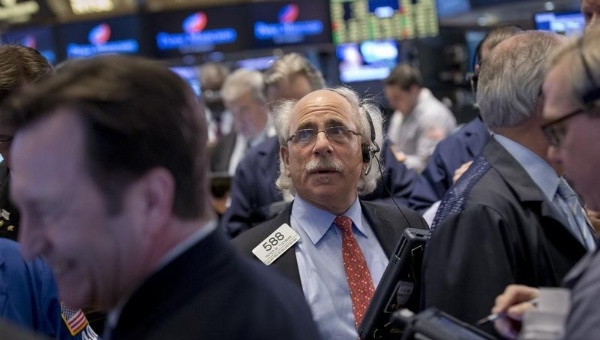


On Friday, Shares of Anthem Inc (NYSE:ANTM), lost -1.13% to $140.56.
According to the American Optometric Association (AOA), 80 percent of classroom learning takes place visually. In addition, one in four school-aged children has vision problems that may affect their ability to learn in school1. Since the starting of a new school year is here, this is the perfect time for parents to plan an appointment with their child’s eye care provider.
“Numerous studies show that vision is closely linked to the learning process,” said Dr. Richard Hom, optometric director for Anthem. “Children and teens that have undetected vision problems will usually have trouble with their schoolwork. Many times, young children won’t complain about vision problems because they don’t know what normal vision looks like. However, a routine eye exam can uncover vision problems that a child or teen may have. And, since August is Children’s Eye Health and Safety Month, this is a great time to plan the exam.”
Dr. Hom suggests the following tips to make sure children and teens are visually prepared for the new school year:
- Watch Your Child’s Behavior. Children and teens with undetected vision problems are sometimes inaccurately diagnosed with attention deficit disorder (ADD) or attention deficit hyperactivity disorder (ADHD)2. There are some behaviors that are often telltale signs that a child or teen might be experiencing vision problems, counting:
- Holding reading materials too close to the eyes
- Using fingers to trace words when reading
- Exhibiting a lack of attention or fatigue in school
- Constantly rubbing the eyes and/or squinting, complaining about headaches
- Frequently turning or tilting the head
- Covering one eye to read or watch T.V.
- Sitting too close to the T.V.
- Skipping lines or losing their place when reading
- Showing extreme sensitivity to light
- Having irritated or teary eyes
- Get An Annual Eye Exam. The AOA suggests that infants have their first comprehensive eye exam at 6 months old. After that, children should have another eye exam at age 3, in addition to right before they enter the first grade (at age 5 or 6). For school-aged children, the AOA recommends an eye exam every two years if no vision correction is needed. However, children who need glasses or contact lenses should be examined annually or as recommended by their optometrist or ophthalmologist.3 Many schools conduct vision screenings for students. Although vision screenings are assistful in determining a child’s ability to see letters clearly, they shouldn’t be used as a replacement for a full eye exam. Parents that have benefits under the Affordable Care Act (ACA) should remember that pediatric vision coverage is one of the 10 essential health benefits (EHBs). The pediatric vision services that are covered as an EHB comprise annual exams, glasses (both lenses and frames) and contact lenses instead of glasses for individuals up to 19 years old (up to 21 in Kentucky).
- Prepare Your Child. Remember to take time to talk with young children about what will happen during the exam. Let them know that they will be asked to identify various objects, such as letters, pictures or shapes. Also let them know that the eye doctor may put drops in their eye, but they won’t hurt. Be honest with your child about what to expect. This will make the exam a more pleasant experience.
Anthem is working to transform health care with trusted and caring solutions. Our health plan companies deliver quality products and services that give their members access to the care they need. With nearly 70 million people served by its associated companies, counting more than 38 million enrolled in its family of health plans, Anthem is one of the nation’s leading health benefits companies.
Shares of Valero Energy Corporation (NYSE:VLO), inclined 1.13% to $59.01, during its last trading session.
Valero Energy Corporation, declared that Joe Gorder, Chairman, President and Chief Executive Officer of Valero Energy Corporation, will present at the Barclays CEO Energy-Power Conference on Wednesday, September 9 at 7:45 a.m. Eastern Time (6:45 a.m. Central Time).
Valero Energy Corporation operates as an independent petroleum refining and marketing company in the United States, Canada, the Caribbean, the United Kingdom, and Ireland. It operates through two segments, Refining and Ethanol. The Refining segment is involved in refining, wholesale marketing, product supply and distribution, and transportation operations.
Finally, Splunk Inc (NASDAQ:SPLK), ended its last trade with - 2.27% loss, and closed at $62.78.
Splunk Inc, declared results for its fiscal second quarter ended July 31, 2015.
Second Quarter 2016 Financial Highlights
- Total revenues were $148.3 million, up 46% year-over-year.
- License revenues were $88.0 million, up 42% year-over-year.
- GAAP operating loss was $65.6 million; GAAP operating margin was negative 44.2%.
- Non-GAAP operating income was $4.8 million; non-GAAP operating margin was 3.2%.
- GAAP loss per share was $0.44; non-GAAP earnings per share were $0.03.
- Operating cash flow was $13.6 million with free cash flow of $10.8 million.
“We are happy with our quarterly results and thrilled to cross the 10,000 customer mark worldwide,” said Godfrey Sullivan, Chairman and CEO. “We have extended our position as the leading platform for machine data with two acquisitions focused on machine learning. With Metafor, we added world-class IT anomaly detection, and with Caspida we will provide data science-driven behavioral analytics for security. Our ongoing investments in product innovation will assist our customers realize even greater value from our solutions across a wide range of use cases.”
Financial Outlook
The company is providing the following guidance for its fiscal third quarter 2016 (ending October 31, 2015):
- Total revenues are predictable to be between $158 million and $160 million.
- Non-GAAP operating margin is predictable to be between 1% and 2%.
- The company is updating its previous guidance for its fiscal year 2016 (ending January 31, 2016):
- Total revenues are predictable to be between $628 million and $632 million (was $610 million to $614 million per preceding guidance offered on May 28, 2015).
- Non-GAAP operating margin is predictable to be between 2% and 3%.
All forward-looking non-GAAP financial measures contained in this section “Financial Outlook” exclude estimates for stock-based compensation expenses, employer payroll tax expense related to employee stock plans, amortization of attained intangible assets, acquisition-related costs and ground lease expense related to a build-to-suit lease obligation.
While a reconciliation of non-GAAP guidance measures to corresponding GAAP measures is not accessible on a forward-looking basis, the company has offered a reconciliation of GAAP to non-GAAP financial measures in the financial statement tables for its fiscal second quarter 2016 and fiscal first half 2016 non-GAAP results comprised of in this press release.
Splunk, Inc. provides software products that enable organizations to gain real-time operational intelligence in the United States and internationally. The company’s products enable users to collect, index, search, explore, monitor, and analyze data regardless of format or source users.
DISCLAIMER:
This article is published by www.wsnewspublishers.com. The Content included in this article is just for informational purposes only. All information used in this article is believed to be from reliable sources, but we make no representations or warranties of any kind, express or implied, about the completeness, accuracy, or reliability with respect to this article.
All visitors are advised to conduct their own independent research into individual stocks before making a purchase decision.
Information contained in this article contains forward-looking information within the meaning of Section 27A of the Securities Act of 1933 and Section 21E of the Securities Exchange Act of 1934, counting statements regarding the predictable continual growth of the market for the corporation’s products, the corporation’s ability to fund its capital requirement in the near term and in the long term; pricing pressures; etc.
Any statements that express or involve discussions with respect to predictions, expectations, beliefs, plans, projections, objectives, aims, assumptions, or future events or performance may be forward looking statements. Forward-looking statements are based on expectations, estimates, and projections at the time the statements are made that involve a number of risks and uncertainties, which could cause actual results or events to differ materially from those presently anticipated. Forward looking statements may be identified with such words as expects, will, anticipates, estimates, believes, or by statements indicating certain actions may, could, should/might occur.